By Adrian Cho, Ph.D.
The note arrives before the thought does. A high E, fortissimo, shouting into the crowd: “Barabbam, oder Jesum?”
In J. S. Bach’s St. Matthew Passion, Pontius Pilate asks the gathered crowd of Jews whether they would rather free Barabbas or Jesus, and for that moment, I am Pontius Pilate. Of course, I’m not actually a Roman governor standing before a mob in first-century Jerusalem; I’m a baritone in a concert hall in Boston. But the performance doesn’t require me to be him – only to know him well enough to inhabit the role.
***
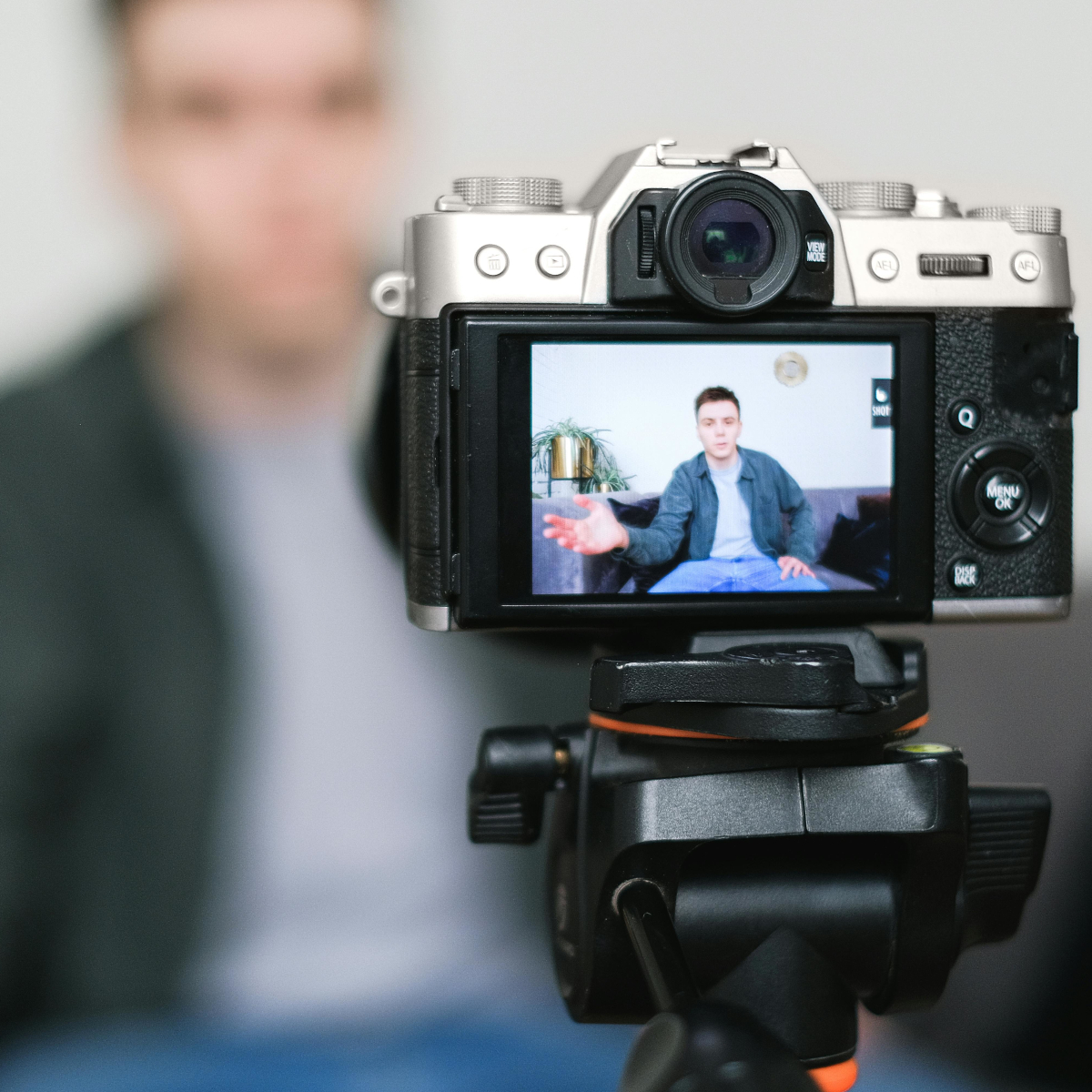
More and more schools are presenting students with the option to submit a video supplement when they apply. I typically recommend that students take advantage of this opportunity to present another facet of their personality and character as a part of the application package. Unfortunately, depending on the student’s temperament, this can be an unfamiliar or even anxiety-provoking exercise. If you’ve ever frozen in front of the record button, rambled through a response and said nothing, or watched yourself back and immediately closed the tab out of embarrassment, you are in good company.
Most students treat the video essay as a self-presentation problem: Who am I, and how do I compress that into ninety seconds? However, that framing tends to make it worse, feel more insurmountable. The more useful frame is performance – not attempting to encapsulate who I am in ninety seconds, but inhabiting my own story the way a performer inhabits a role.
Know Your Material, But Don’t Memorize It
Students tend to fall into one of two camps when it comes to preparing for video essays. Some want to write out a full script and memorize it, leaving nothing to chance. Others want to wing it, trusting that words will come when the camera goes live. Both approaches have their upsides and downsides. Reciting a memorized script, while seemingly polished, will tend to lead to a rigid and oddly lifeless result. On the other hand, doing it extemporaneously may feel spontaneous and energetic for the first fifteen seconds but carries the risk of circling without a point or coherence for the rest of the video. The key is finding a middle ground between the two approaches: knowing your material well enough so that you don’t have to spare the mental effort of retrieving it, but loosely enough that you are still present and flexible when you deliver it.
If you are a scripter, the fix is straightforward. Write it out, but then read it back and ask, “Does this sound like a person talking, or a person writing?” It may help to imagine that you are talking to a friend or family member. Revise until it sounds natural, then put it away. If you are a winger, the same exercise applies: Write it out, because writing forces you to organize your thoughts into a coherent, linear structure that’s much harder to do in your head and on-the-fly. In either case, what you aim to perform is an internalized understanding rather than a specific sequence of words and sentences. This understanding will allow you to fluidly and confidently inhabit the role of yourself (in this very specific context).
To diagnose problems, it is vitally important that you review your footage. As a performer, I know well how awkward it can feel to watch yourself on recording. Performers do this anyway, because recordings don’t lie. Your internal experience of a take and what actually lands on camera can be surprisingly different. Identify awkward pauses, moments where you forgot what to say, and moments where you disappeared. Watch for when you look natural, relaxed, and are actually thinking rather than retrieving. That’s the take you want.
Preparing Your Instrument
There’s something performers know that tends to fly under the radar when it comes to advice on video essays: You are the instrument. A singer doesn’t walk straight from a desk to the stage. They warm up, they breathe, they get the body online before they ask it to perform. Athletes, musicians, dancers – performers of all stripes know this, and the same principle applies here. If you sit hunched over a laptop for two hours and then hit record, you will look and sound exactly like someone who sat hunched over a laptop for two hours.
So before you record, move. Go for a jog, do some jumping jacks, shake out your hands. This isn’t incidental. Research consistently shows that even a few minutes of physical activity produces a near-immediate mood and energy boost. Physical activation changes your vocal energy, your posture, your eye contact – everything that reads as presence on camera. The social dimension matters here too. A brief, light conversation with a friend or family member loosens your face, gets your voice out of cold-start mode, and switches your brain from isolation mode into a social, verbal register. Think of it as a vocal warmup that also happens to be pleasant.
Finally, your recording environment should be treated as a performance space rather than just a convenient corner of your bedroom. Have good lighting – ideally in front and above you – a neutral background, and your camera at eye level rather than looking up your nose. These details matter less than your energy and presence, but they signal to the viewer, and to yourself, that this is a real performance, not a casual experiment. The act of setting up the space is itself a kind of warmup ritual, a way of signaling to your nervous system that something real is about to happen.
Knowing What To Say
There are two formats that can give students problems. The first is the open-ended prompt on platforms like Glimpse where you are asked to share something about yourself of your own choosing. The open canvas can feel daunting, and you will want to be thoughtful about the topic. What you share shouldn’t overlap too much with any of the essays you wrote for the school, but it also shouldn’t seem to come out of left field. Aim to provide a window into something the rest of your application doesn’t show. A creative use of visual or audio props can enhance the presentation, if appropriate.
The second prompt is the spontaneous prompt, where the platform asks you to consider a question that you’ve never seen before with sixty seconds to think before you record. Sometimes you are allowed more than one take, but usually no more than two. While the exact question will be unknown, the types of questions that are asked tend to be predictable. Read the instructions carefully – schools often describe the prompt in general terms. It’s also worth doing research online to find questions from previous years, which can give you a strong sense of what’s coming. From there, the preparation is less about scripting but more about knowing your material cold. Leadership moments, teamwork experiences, challenges you overcame, moments of growth or self-reflection are categories that come up over and over. Know your resume well enough to draw from it fluently. Just as a musician sight-reading a piece they’ve never seen before draws on years of internalized scales, intervals, and chord progressions, your preparation here works at the same level of abstraction. The specific question is new; the underlying material is yours.
For the spontaneous prompt, when the sixty second timer starts, spend a few moments considering the experiences you’ve prepared, then quickly pick something that works well enough and commit to it. The underlying principle applies to both formats: the admissions reader is not grading you on whether you picked the optimal topic or example. They’re watching how you think, how you handle mild pressure, whether you’re someone they’d want in their classroom. A student who picks a decent example and delivers it with clarity and conviction reads as more capable than one who visibly agonizes over a “better” example and then fumbles it. As Voltaire remarked, perfect is the enemy of good. Pick something that works, deliver it with conviction, and trust your preparation.
***
The video essay is an unusual task. It wants you to be yourself on camera, on demand. But performers have been doing versions of this for centuries. Prepare your material, prepare your instrument, and when the moment comes, trust that the note will arrive before the thought.
Comments are closed.