By Caroline Matas, Ph.D.
Are schools still assigning The Great Gatsby these days? Candidly, it wasn’t my favorite required reading, but I’ve got to hand it to F. Scott Fitzgerald: the man could write a conclusion.
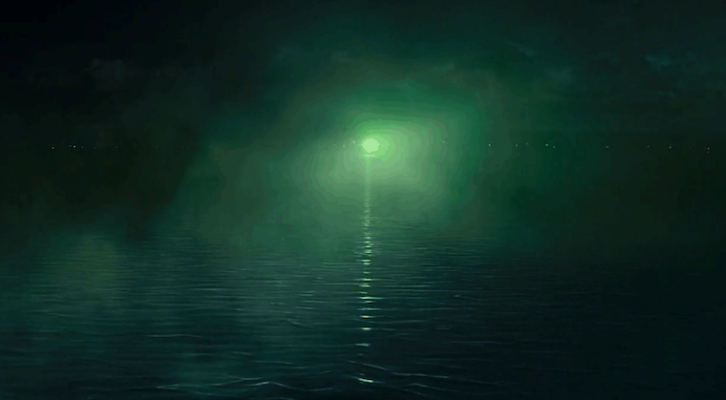
“Gatsby believed in the green light, the orgastic future that year by year recedes before us. It eluded us then, but that’s no matter–tomorrow we will run faster, stretch out our arms farther… And one fine morning–
So we beat on, boats against the current, borne back ceaselessly into the past.”
There’s a reason this passage remains one of the most famous final lines in American literature: it’s confident, it’s powerful, and it leaves final interpretations in the hands of the reader. In short, it lets the prior work of the book stand for itself, without feeling the need to tie everything up in a bow. Imagine, now, if Fitzgerald had continued on–”What I mean by this is that it’s really hard to live in the present, even if you want to. As life continues, we spend more and more time romanticizing past times in our lives… [etc.]” Suffice it to say, such an ending would have, itself, receded into literary obscurity.
Writing a killer conclusion is easier said than done. It is hard to let your words stand on their own, hard to resist the urge to continue explaining yourself, especially after years of writing academic essays that require such clarity.
What I tell my students as they work on crafting their personal statements is this: borrow some courage from F. Scott Fitzgerald. Be brave enough to leave the reader guessing. Be confident enough in the message of your essay to let it speak for itself. Most of all, put your faith in the reading comprehension of the admissions counselors who will encounter your essay. As a former admissions counselor myself, I can promise you that an unexpected conclusion will be a breath of fresh air and cause your reader(s) to give you a second look.
What does mastering the mic drop look like in practice? It’s as simple as it is painful: Draw your narrative to a conclusion and then (this is crucial), delete the extra paragraph you have at the end wrapping everything up.
It feels impossible, I know. But here are a few best practices to help you get there:
- Return to your opener.
Did you begin your essay with an anecdote about an object in your room, a favorite food, an action-packed moment? Revisit it during your conclusion, and let the lessons you demonstrated learning over the course of the essay act upon that anecdote!
- Make sure you’re not just restating a lesson you’ve already shown yourself learning.
It’s perfectly fine to underscore the takeaway of your essay in your conclusion, but try to do it by showing instead of telling. Swap out your generic lesson learned for a specific example of you living out that lesson or living in light of having learned that lesson.
- Step away from the keyboard!
Just as you had to overcome years of “how to write a paragraph” training in order to open your personal statement in medias res, so too will you have to fight against your inner 5-paragraph essay to make a fresh and memorable conclusion. Give it a try! Lop off that final paragraph and see how it reads. You might just surprise yourself.
I’d be remiss if I spent all this time talking about writing strong conclusions without offering my own example. To that end, I’ve whipped up an imaginary personal statement with two possible endings. You can decide for yourself which one is better!
My essay is about the ways two people can fail to see each other, even when they know each other well. My opening example (and please note, this is a true story): I was in a fight for my life trying to reattach my freshly-washed duvet cover to the duvet insert. It is a task I hate, and every time I have to do it, I grumble to myself about why on earth my wife prefers duvet covers to comforters. Finally, I say this to her out loud. After years–YEARS–of marriage, my wife responds, “Wait, I thought YOU liked duvets. I hate them!” The essay goes on–what else have we been missing about each other? It is, at turns, funny and heartwarming.
Now, here’s how I might end it, if I wanted to disregard best practices 1, 2, and 3:
It’s impossible to know someone fully. I’m sure that even after many more years together, my wife will find ways to surprise me. Nevertheless, I take comfort in the fact that we know each other in the ways that really matter.
See how I managed to tell the reader absolutely nothing new? Let’s try something different, and I’ll take my leave:
Next weekend, we are finally heading to Crate and Barrel to pick out a comforter. What color, pattern, or fabric we’ll end up agreeing to, I can only guess. But I know that as I drive us home, my wife will rest one ankle on the dashboard, turn down the air conditioning on her side of the car, and ask whether we should stop for a latte on the way back into the city. And I know I’ll say yes.
Comments are closed.